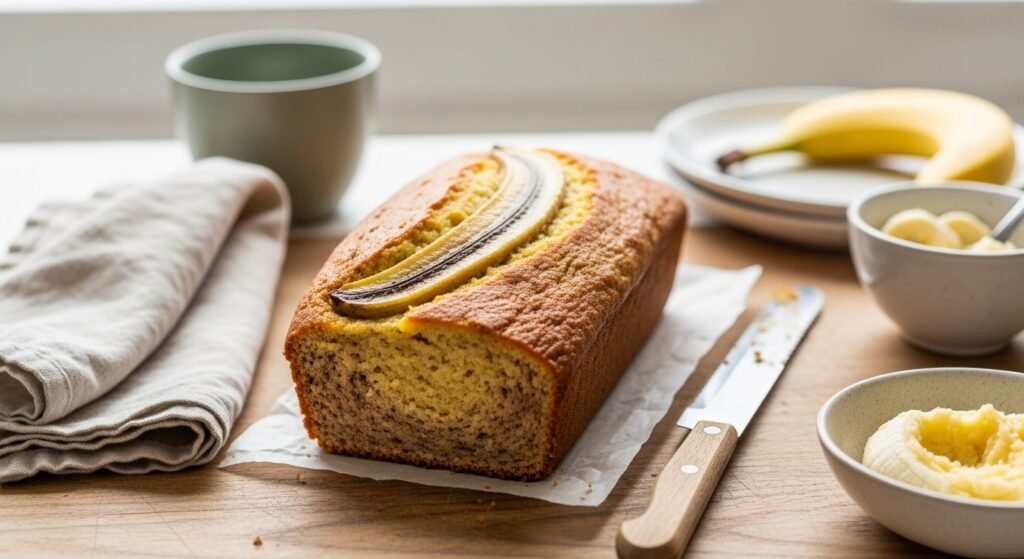
You want banana bread without butter that stays moist, tender, and full of flavor—no compromises. Maybe you’re out of butter, dairy-free, or just want a lighter loaf; either way, this recipe delivers a soft crumb and deep banana flavor every time. You’ll learn how to balance wet and dry ingredients, avoid a gummy center, and bake with confidence so your banana bread without butter looks and tastes like a keeper.
The secret tools I use are a digital kitchen scale for consistent measurements and a well-seasoned 9×5 loaf pan to get clean edges and even baking. Both save time and prevent common mistakes that dry out the bread.
Read on for quick prep, foolproof mixing steps, accurate bake times, and storage tips so your banana bread without butter stays fresh through the week.
Preparing Your Ingredients (ripeness, swaps, and measuring)
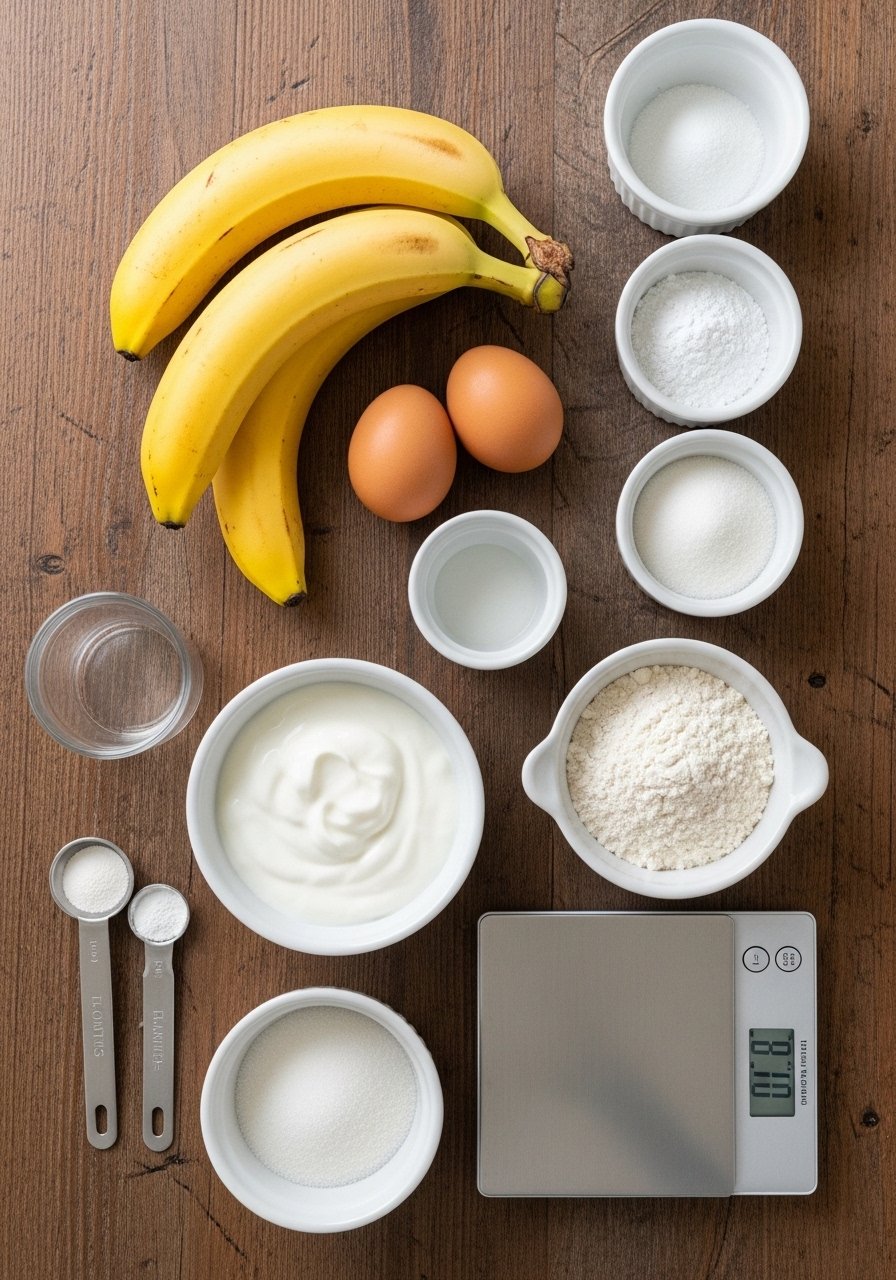
Start with ripe bananas—3 medium very brown bananas (about 1 1/2 cups mashed) give the best flavor and moisture. For butter-free richness, use 1/3 cup neutral oil (vegetable or light olive oil) plus 1/3 cup plain Greek yogurt; or swap yogurt for 1/2 cup unsweetened applesauce for a lighter loaf.
Key measurements:
- 1 3/4 cups (220 g) all-purpose flour
- 1 tsp baking soda, 1/2 tsp salt
- 1/2–3/4 cup sugar (adjust to taste)
- 2 large eggs
- 1/3 cup oil + 1/3 cup Greek yogurt (or applesauce)
Weighing flour on a digital kitchen scale avoids flour-packed bread. Prep ingredients in glass prep bowls to streamline the mixing step.
The Mixing Technique (easy, one-bowl method for moist crumb)
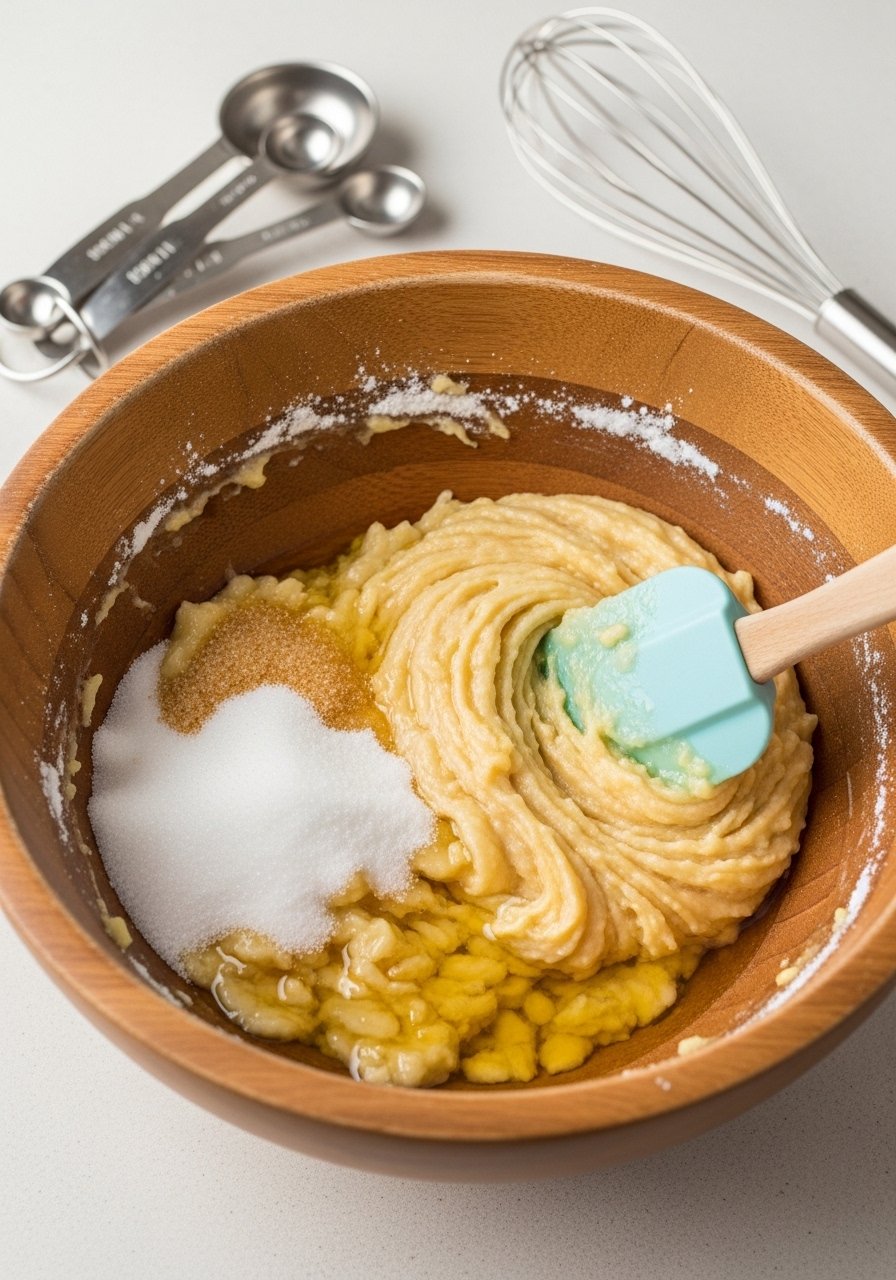
Use a simple one-bowl method to avoid overmixing:
- Whisk wet ingredients: mashed bananas, 2 eggs, oil, and Greek yogurt in a large bowl.
- Fold dry ingredients (flour, baking soda, salt) into wets just until combined—stop when you see a few streaks of flour.
- Stir in optional mix-ins: 1/2 cup chopped walnuts or 1/2 cup dark chocolate chips.
Tools that help:
- A silicone spatula prevents batter scraping and folding damage.
- If you prefer, a hand mixer on low for the wet ingredients speeds prep but don’t overmix once flour is added.
Tip: folding gently keeps the crumb light. If adding nuts, toss them in a tablespoon of flour first so they don’t sink.
Baking & Doneness (timing, temperature, and troubleshooting)
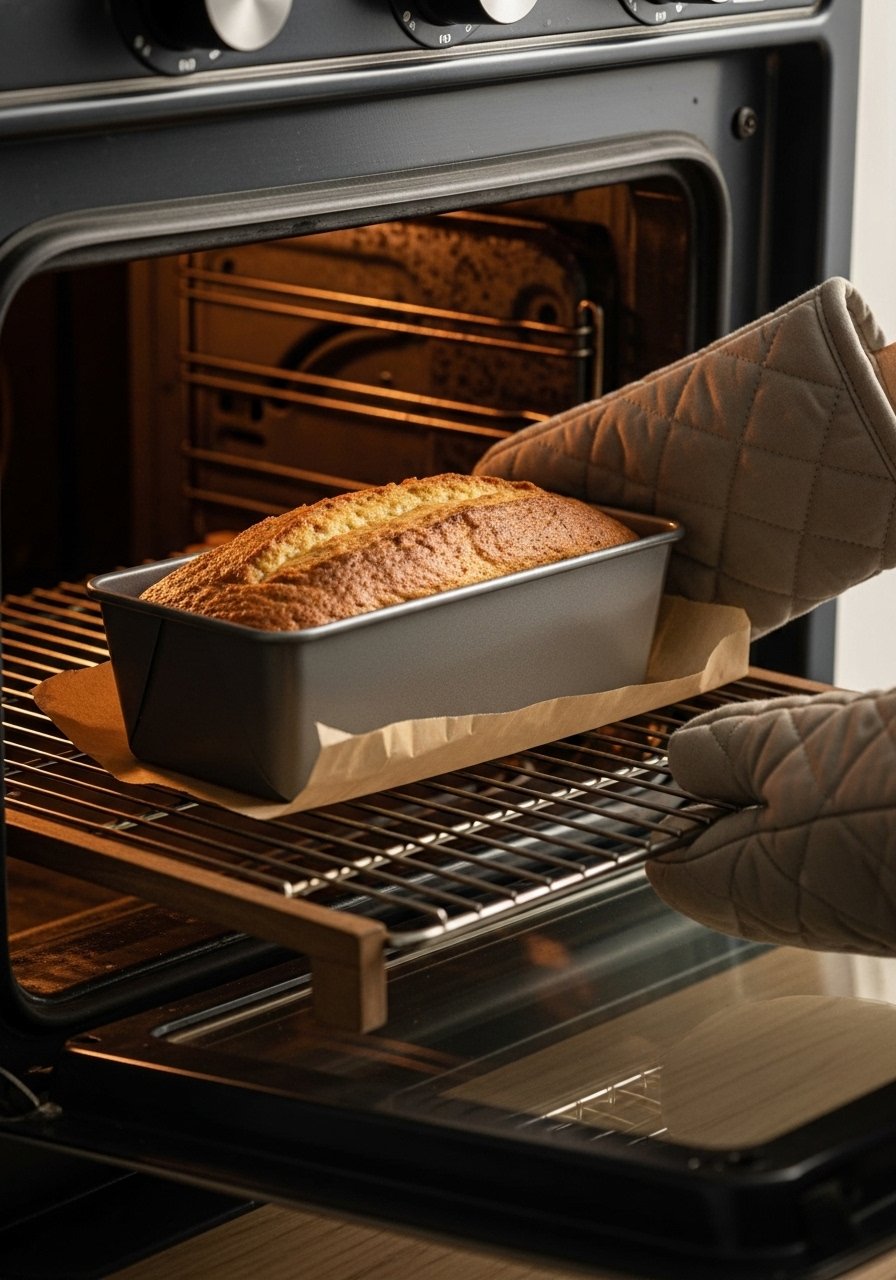
Preheat oven to 350°F (175°C). Line your 9×5 loaf pan with parchment or grease it for easy release. Bake 50–65 minutes—start checking at 50 minutes.
Doneness cues:
- A toothpick inserted into the center should come out with a few moist crumbs, not wet batter.
- For precision, use an instant-read thermometer: aim for 195–205°F in the center.
- If the top browns too quickly, tent with foil after 30–35 minutes.
An oven thermometer helps ensure your oven is accurate—many home ovens run hot or cool, which affects bake time.
Finishing Touches and Storage (slicing, freeze, and reheating)
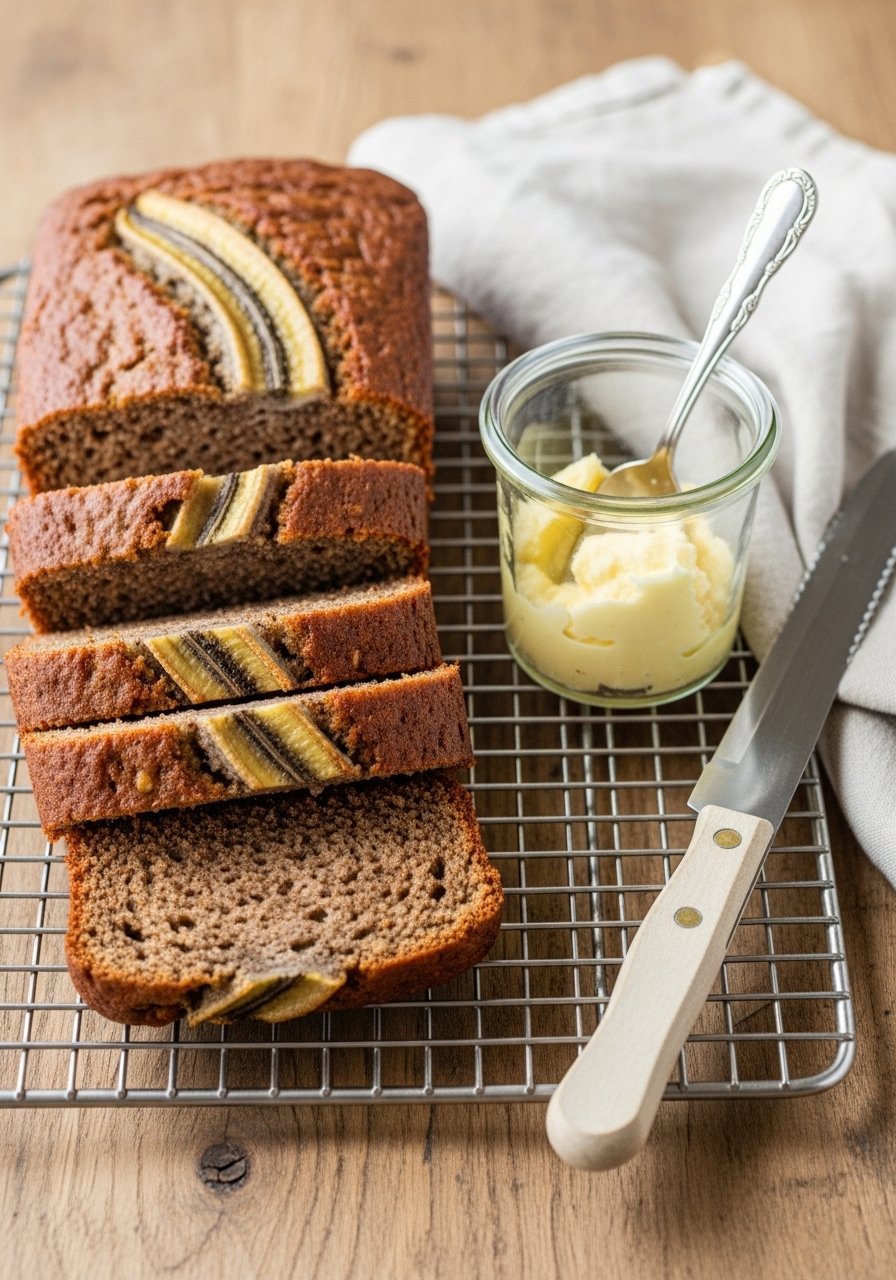
Cool the loaf in the pan for 10 minutes, then transfer to a wire cooling rack to prevent soggy bottoms. Slice after it reaches room temperature for the cleanest cuts.
Storage tips:
- Keep at room temp in an airtight glass container for 2–3 days.
- Freeze slices flat in labeled freezer bags for up to 3 months; thaw at room temp or warm briefly in the toaster oven.
Quick reheating: 20–30 seconds in the microwave or 6–8 minutes at 325°F wrapped in foil.
You’ve just learned a reliable approach to banana bread without butter that’s soft, flavorful, and forgiving. Save this guide, pin it for later, and try the suggested swaps—Greek yogurt adds tang, applesauce lightens, and oil keeps the loaf moist. Which variation will you test first? If you want one tool that guarantees consistency every bake, grab an instant-read thermometer and you’ll never guess doneness again. Pin this guide for your next baking session!