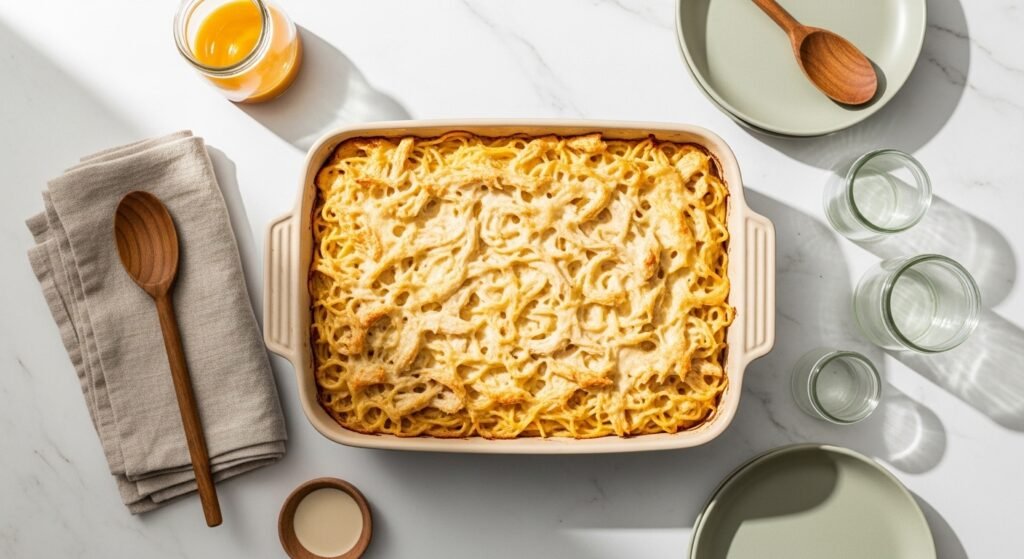
You love chicken spaghetti, but freezing it often leaves the sauce grainy or the pasta mushy. If you want to freeze chicken spaghetti the right way so it stays fresh and creamy for months, this guide walks you through the exact steps that work every time.
The secret is cooling, portioning, and sealing correctly. I use airtight glass storage containers for single portions and freezer bags for flat freezing—both save space and prevent freezer burn.
Read on to learn how to cool without condensation, which containers preserve creaminess, thaw-and-reheat timings, quick fixes if sauce separates, and easy labeling tips so your meal prep is pin-ready.
Prep and Cool: Get the Texture Right Before Freezing
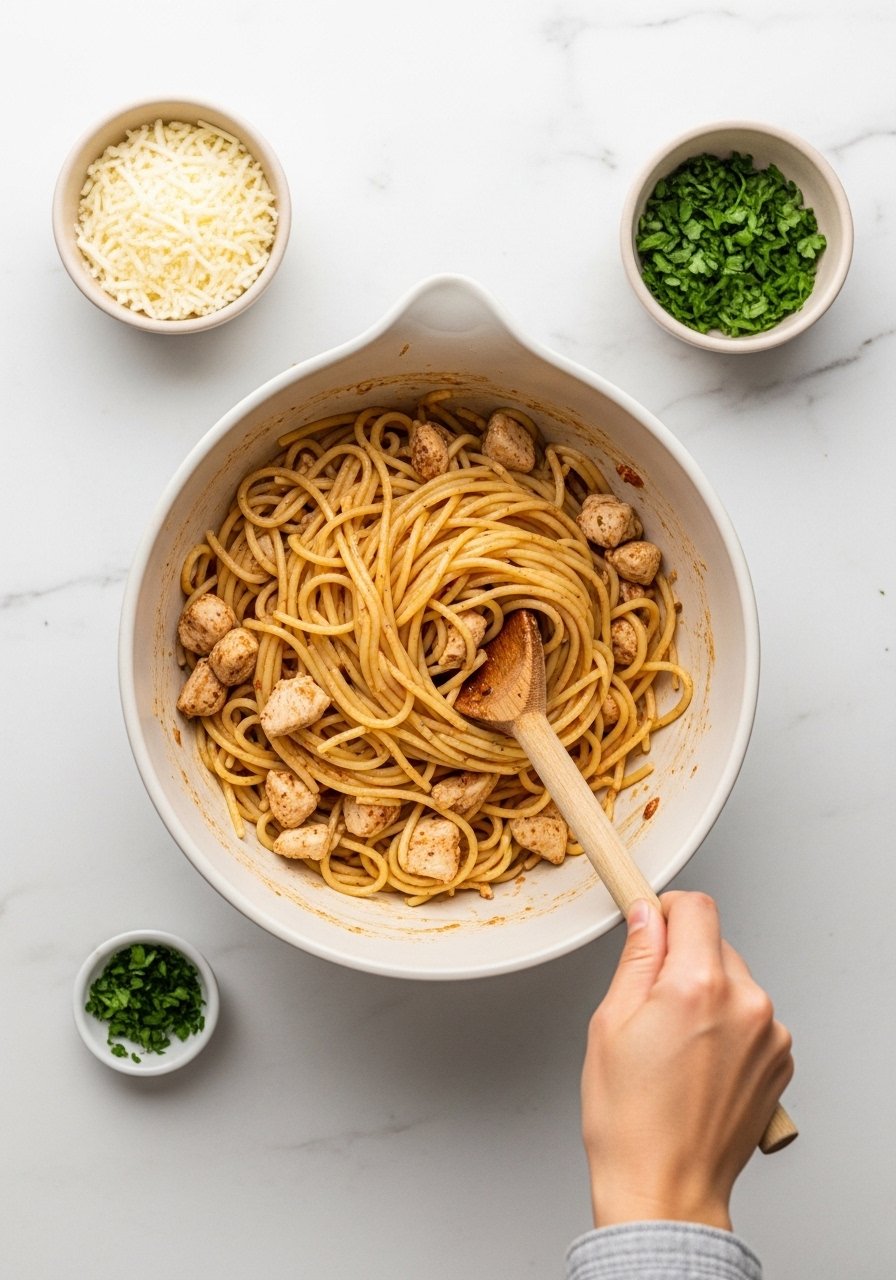
Before you freeze, stop the cooking at the right moment. Cook pasta 1 minute less than package directions so it’s slightly underdone and won’t turn mushy after freezing and reheating. Mix the sauce and chicken while the pasta is hot so it soaks up liquid, then let the whole pan cool.
- Cool uncovered at room temperature for 30 minutes, then chill in the fridge for 1–2 hours to bring the casserole below 40°F.
- Transfer to a shallow pan or divide into bowls to speed cooling—I use glass meal prep bowls so food chills evenly and stacks in the fridge.
Tip: Stir gently once while cooling to keep the sauce smooth. Use a silicone spatula so you don’t scrape nonstick pans.
Portion, Pack, and Seal for Long-Term Freshness
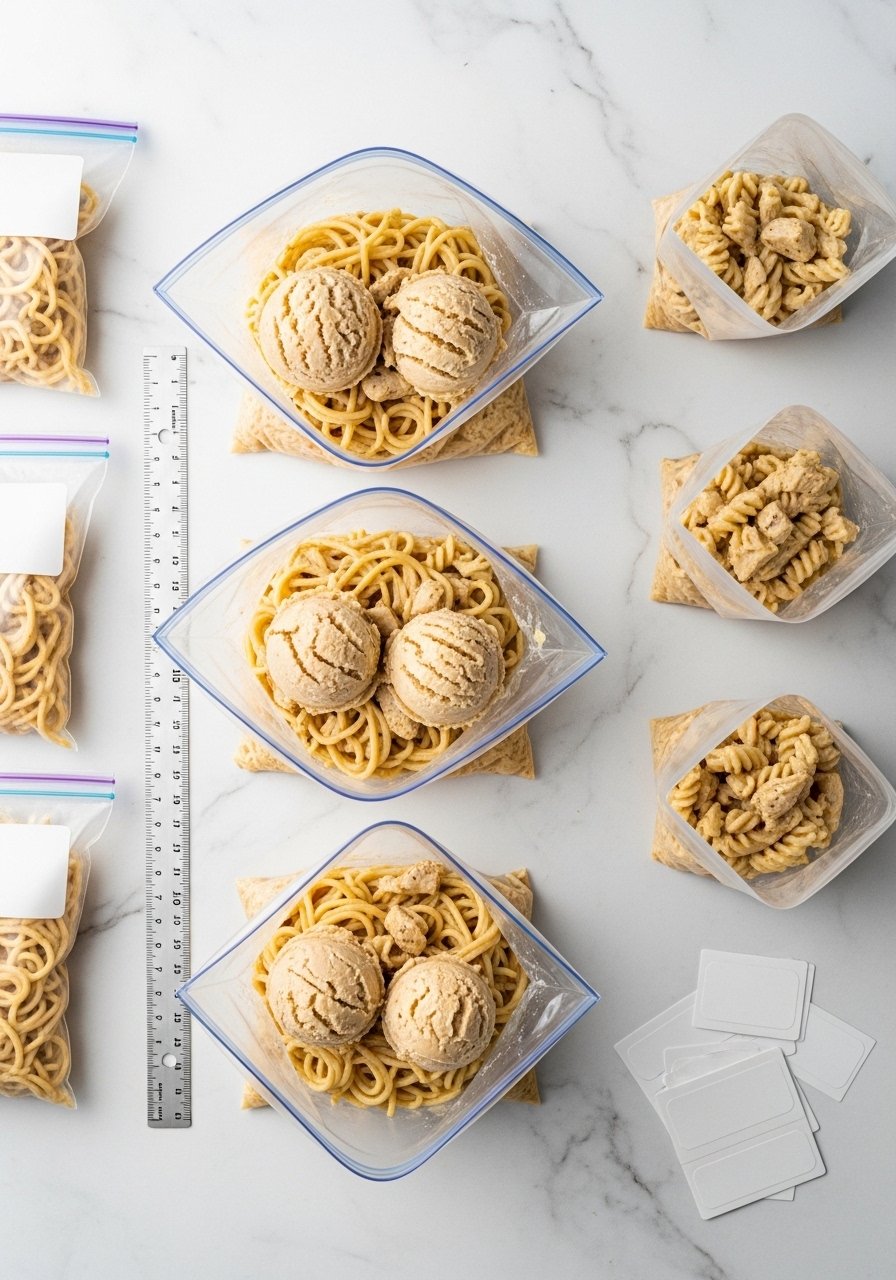
How you pack matters more than the container. Portioning saves time and keeps reheats consistent.
- For single meals, scoop about 2 cups per portion (covers one plate). For family dinners, a 9×13 pan holds about 6–8 servings.
- If using bags, fill each bag, press flat to remove air, then lay flat on a baking sheet and freeze. Flat bags stack easily and thaw faster.
- For casseroles you plan to bake from frozen, use disposable foil pans or an oven-safe casserole dish covered tightly with foil.
- Use a vacuum sealer if you want the longest freezer life—removes air and prevents freezer burn.
- Seal with aluminum foil over lids or bags for an extra barrier: aluminum foil.
Warning: Don’t pack when hot. Hot food creates steam, which condenses and forms ice crystals that ruin texture.
Label, Freeze, and Reheat Without Losing Creaminess
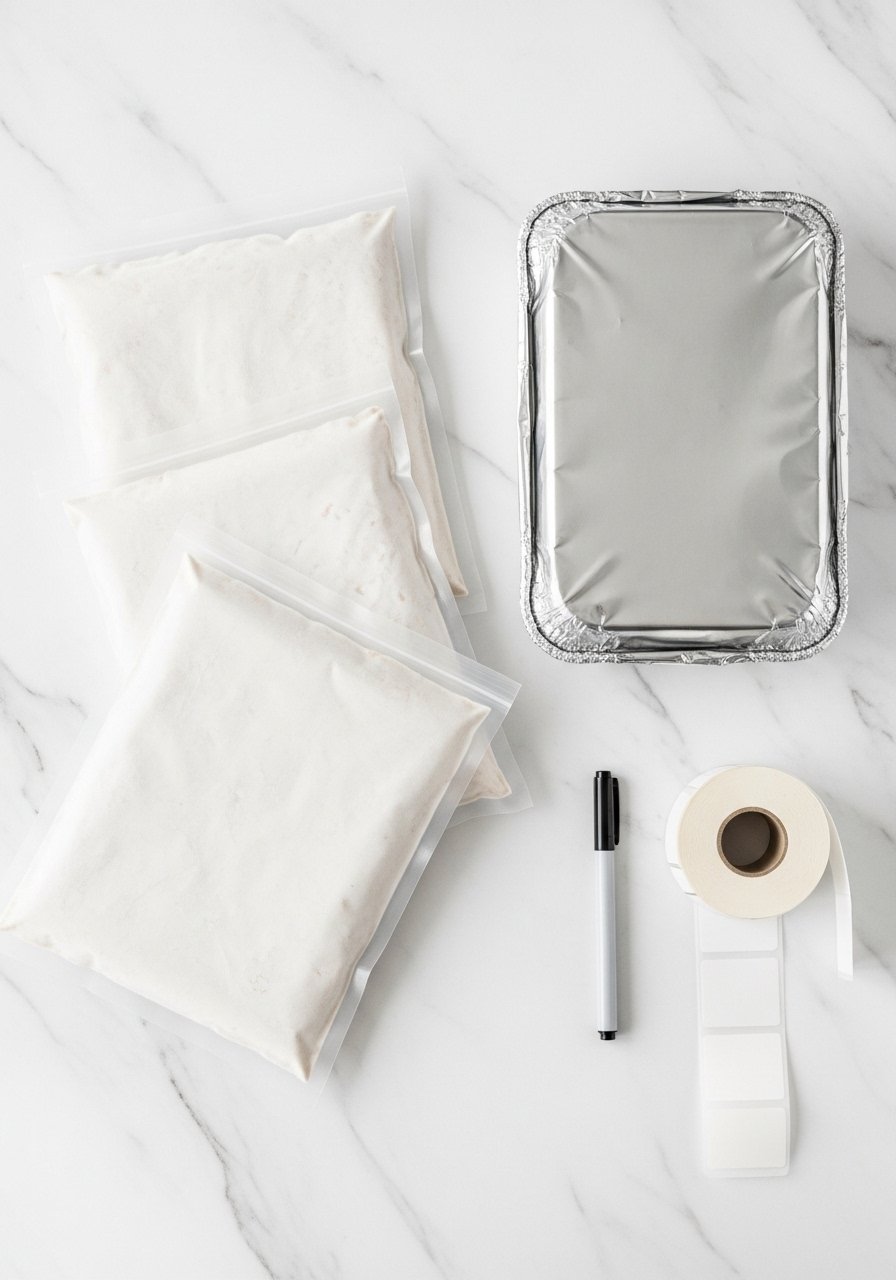
Label everything with contents and date. Chicken spaghetti keeps well for 3–4 months if sealed properly.
- Use freezer labels or write directly on bags with a marker.
- For reheating from frozen: bake covered at 375°F for 45–60 minutes until bubbling; remove foil for the last 10 minutes to brown the top.
- For thawed portions: bake at 350°F for 25–35 minutes until hot through.
Check doneness with an instant-read thermometer—aim for 165°F internal temperature.
If sauce separates during reheating, stir in 2–4 tablespoons of milk or cream and bake 5–10 minutes more. Microwave reheats work for single servings—use an airtight container and heat in 1-minute bursts, stirring between bursts to keep sauce creamy.
Quick Troubleshooting and Pin-Worthy Finishing Touches
- Soggy pasta? Next time undercook pasta by an extra minute and reduce added liquid.
- Grainy sauce? Stir in a splash of cream or a knob of butter before reheating.
- Freezer burn? Use a vacuum sealer or double-wrap with foil.
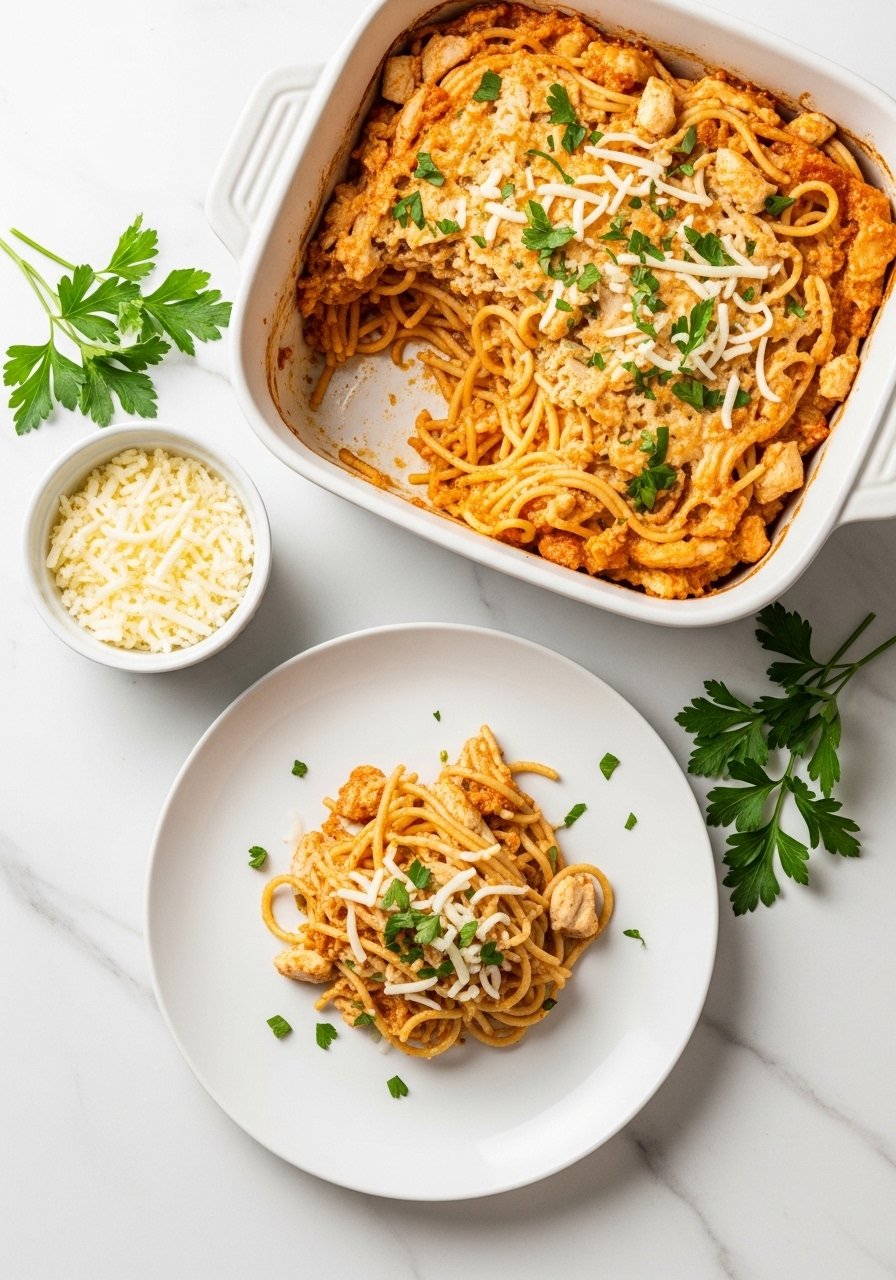
Sprinkle fresh parsley and a little extra cheese after reheating for a picture-perfect finish that looks great on a pin.
Once you’ve got this method, freezing chicken spaghetti becomes low-effort meal prep. Save the guide, pin it for later, and grab a set of airtight glass storage containers if you want the easiest reheats. Which reheating tip will you try first?