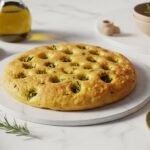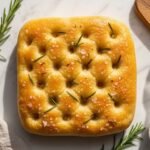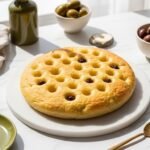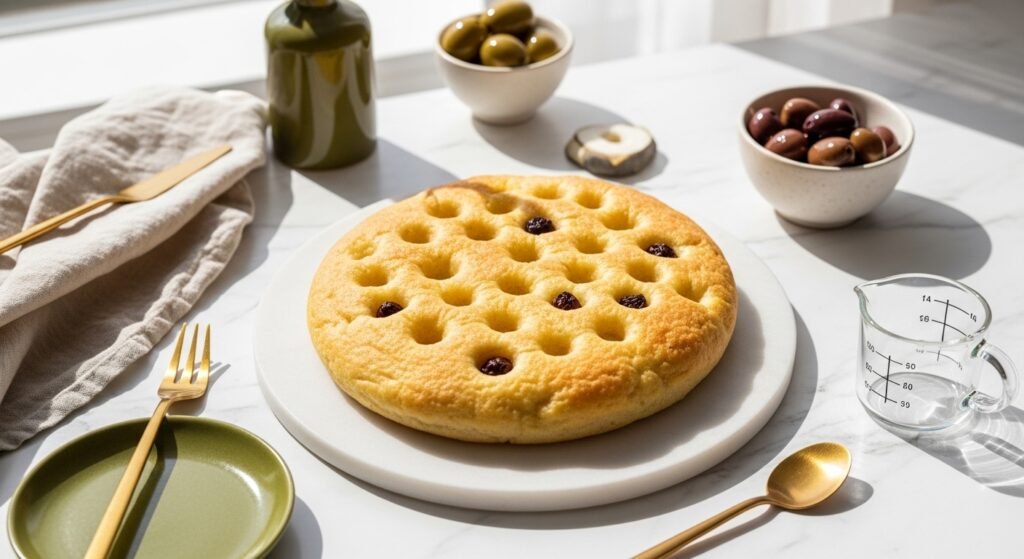
You love the idea of warm, olive-oil–kissed bread but don’t have hours or active yeast on hand. Learn How to Make Focaccia Bread Without Yeast that’s still perfectly fluffy and full of flavor — no proofing, no fuss, just a quick, reliable method you can make tonight.
The secret is a simple chemical lift plus oil-rich dough and a hot oven. Use a digital kitchen scale for consistent measurements and a sturdy rimmed baking sheet for even browning. These tools cut guesswork and get you crisp edges with a pillowy center.
You’ll learn ingredient swaps, a one-bowl mixing technique, exact timing, troubleshooting tips, and storage. Follow the step-by-step to make one 9×13 focaccia in about an hour from start to finish.
Preparing Your Ingredients and Station
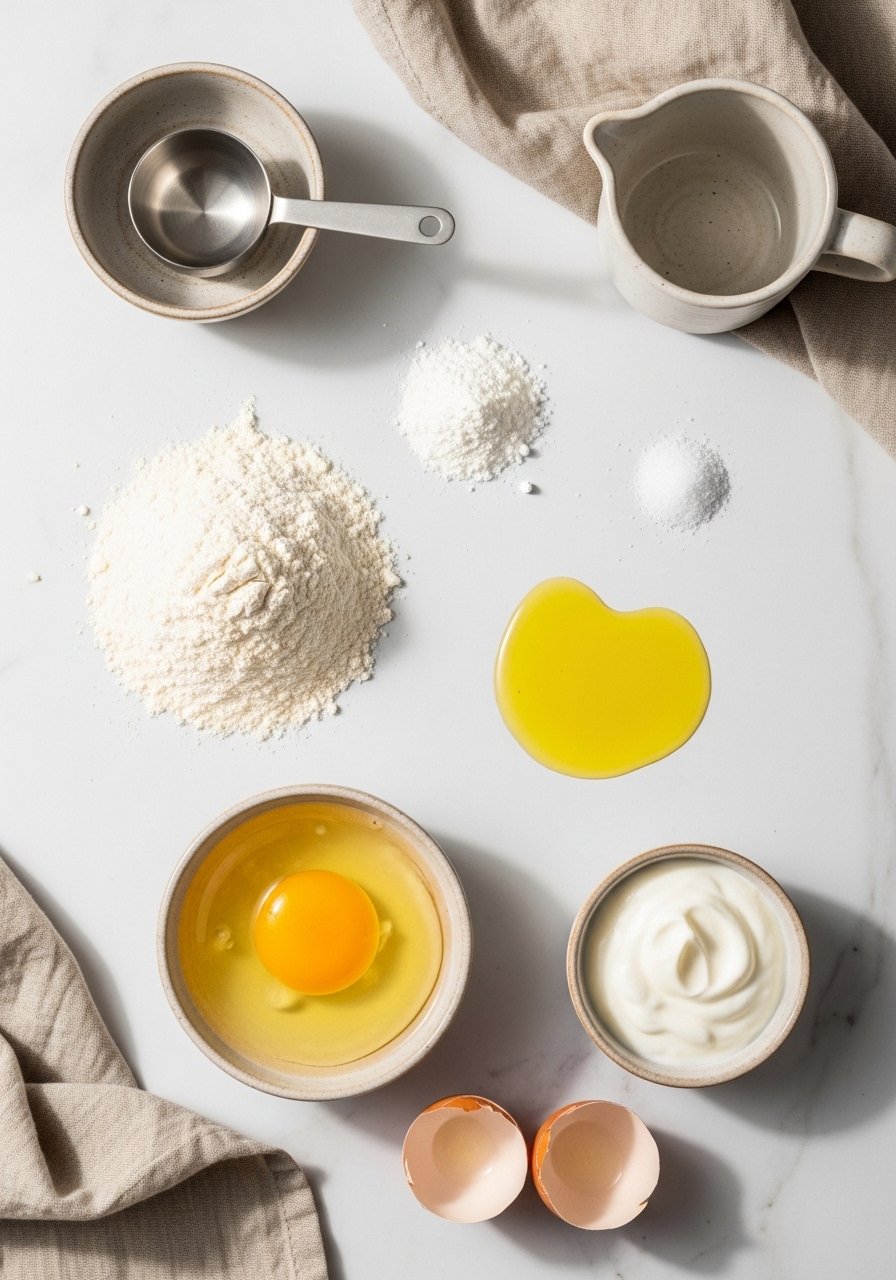
This yeast-free focaccia uses baking powder + baking soda and Greek yogurt (or buttermilk) for lift and tenderness. Measure precisely.
- Flour: 3 cups (360g) all-purpose flour — use a digital kitchen scale for accuracy.
- Leaveners: 2 tsp baking powder + 1/2 tsp baking soda.
- Wet: 1 cup plain Greek yogurt, 1/3 cup olive oil, 1/2 cup warm water.
- Salt: 1 1/2 tsp
- Optional: fresh rosemary, flaky sea salt, sliced cherry tomatoes.
Tips:
- Let yogurt sit at room temp 10 minutes so dough mixes smoothly.
- Line your rimmed baking sheet with a silicone baking mat or parchment paper for easy release.
Mixing, Shaping, and Dimpling (One-Bowl, 30-Minute Prep)
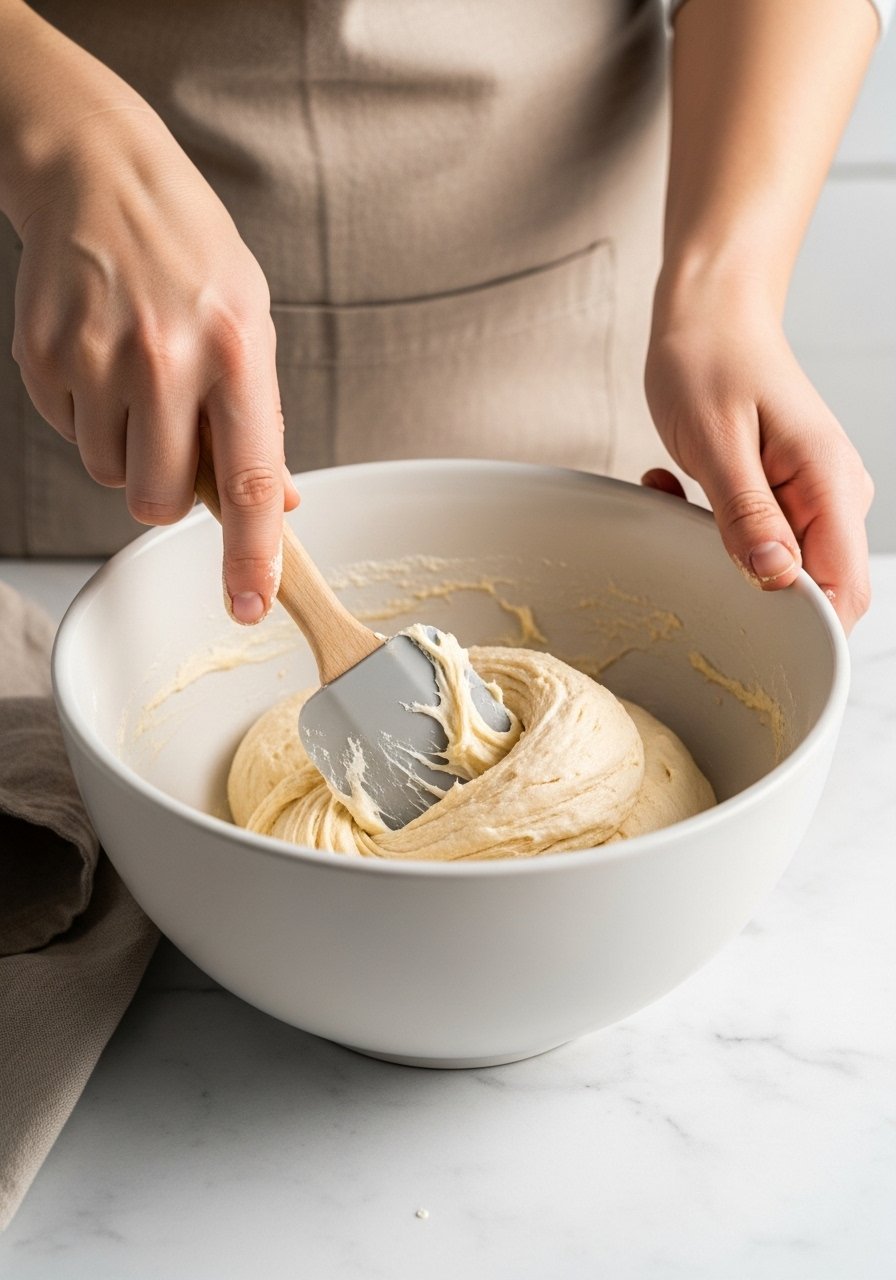
This is a one-bowl mix — no stand mixer required, though a hand mixer works if you prefer. Mix until just combined; the dough will be sticky.
- In a large bowl, whisk together flour, baking powder, baking soda, and salt.
- Add yogurt, 1/3 cup olive oil, and warm water. Stir with a silicone spatula until a shaggy, slightly sticky dough forms.
- Let rest 10–15 minutes; the leaveners activate and the dough relaxes.
- Transfer to the prepared sheet and press with oiled fingers to a 9×13 shape. Use an offset spatula if you want even edges.
Pro tips:
- Wet your fingers to make dimpling easy and avoid sticking.
- If the dough resists spreading, let it rest another 5 minutes.
Getting the Perfect Texture and Baking
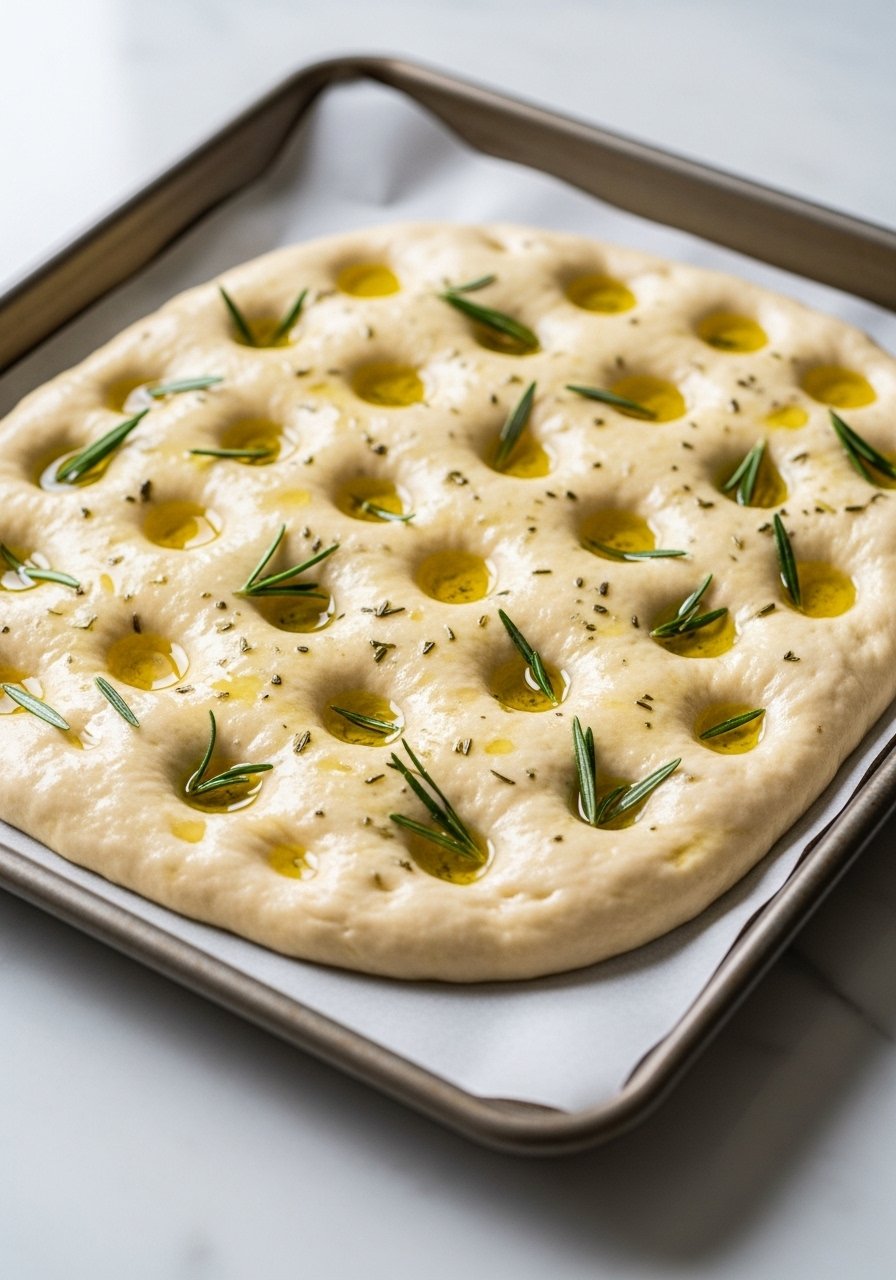
Preheat oven to 425°F (220°C). The high heat gives a crisp, golden crust while keeping the interior fluffy.
- Brush with oil and top with rosemary and flaky salt.
- Bake 20–28 minutes until golden brown and a toothpick comes out mostly clean.
- For an even browner bottom, bake on a preheated 10-inch cast iron skillet or use a preheated rimmed sheet.
Check doneness:
- If you prefer precision, an instant-read thermometer should read ~200°F in the center.
- Remove and immediately brush with extra olive oil for shine.
Warnings:
- Overbaking dries the interior; watch the last 5 minutes closely.
- Sticky dough is normal — avoid adding too much flour or you’ll lose tenderness.
Finishing Touches, Serving, and Storage
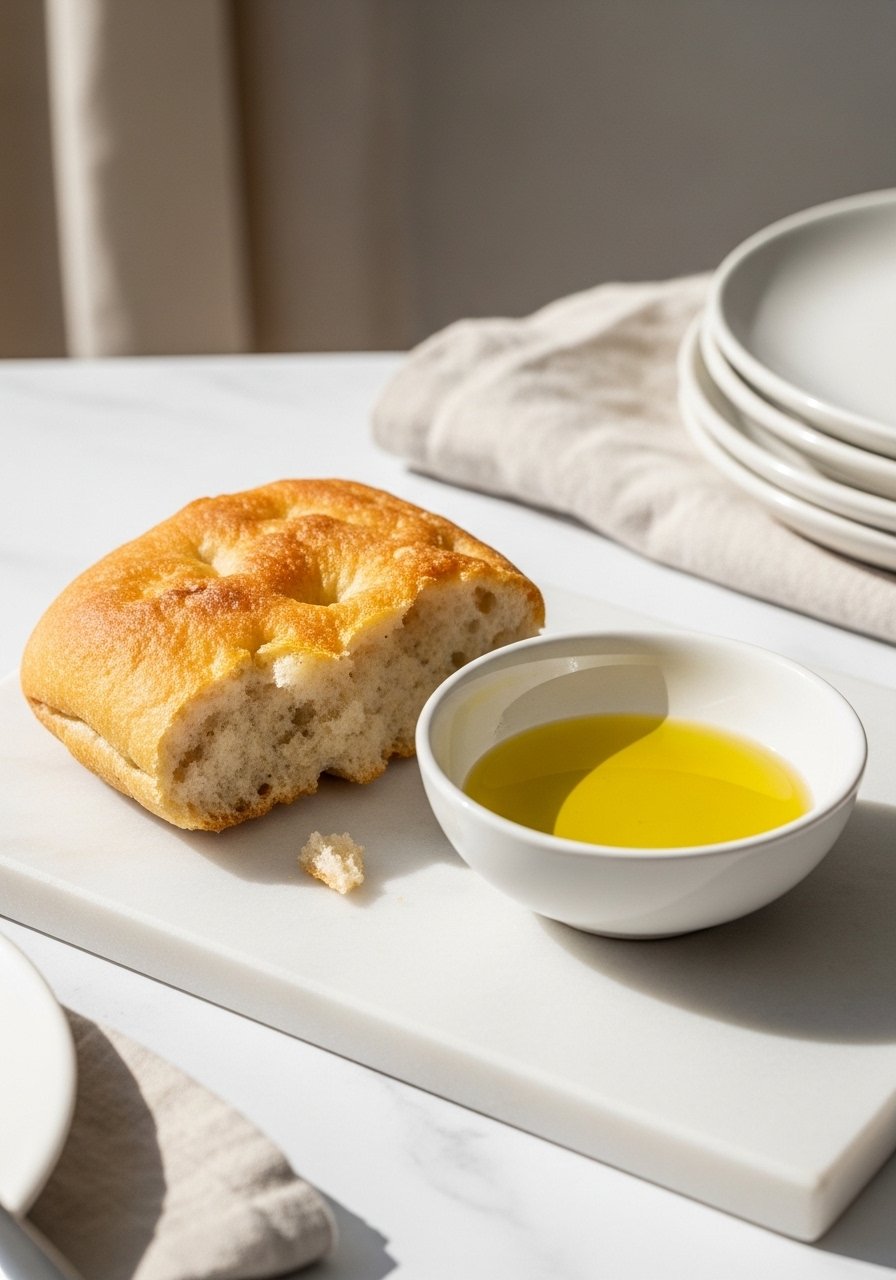
Serve warm with olive oil, dips, or as a sandwich base. Yields about 8 generous pieces from a 9×13 pan.
- Cool on a wire cooling rack 10 minutes to avoid soggy bottoms.
- Store cooled focaccia at room temp in airtight glass containers for up to 2 days, refrigerate up to 5 days, or freeze slices up to 3 months.
- Reheat in a 350°F oven for 8–10 minutes for fresh texture.
Quick variations:
- Add grated parmesan, caramelized onions, or olives to the top before baking.
- Swap Greek yogurt for 1/2 cup buttermilk for tang.
Once you try this method, you’ll see how forgiving it is. This guide showed you How to Make Focaccia Bread Without Yeast with no-fail ratios, timing, and tools so you can bake this weeknight beauty any time. Pin this for later, try the rosemary-and-sea-salt version tonight, and tell me — which topping will you test first?